Roommate Coordination App
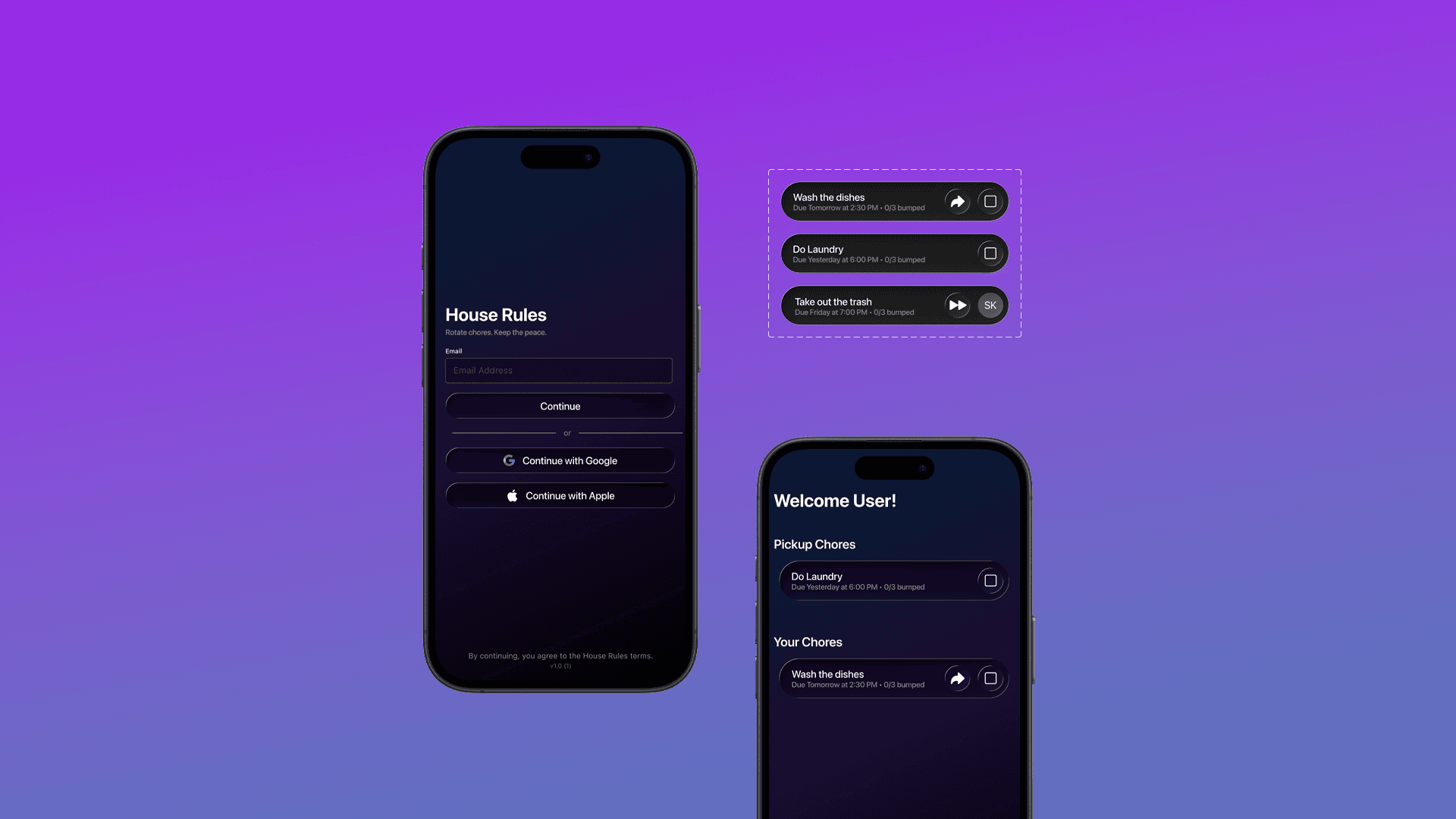
House Rules — an iOS app that turns roommate agreements into a living system.
Role
Overview
House Rules is an iOS app that turns roommate agreements into a living system. I designed and built it end-to-end — UX, UI, and the SwiftUI + Firebase stack underneath. The goal was to make shared-living rules feel light enough that housemates actually use them.
Visual Design
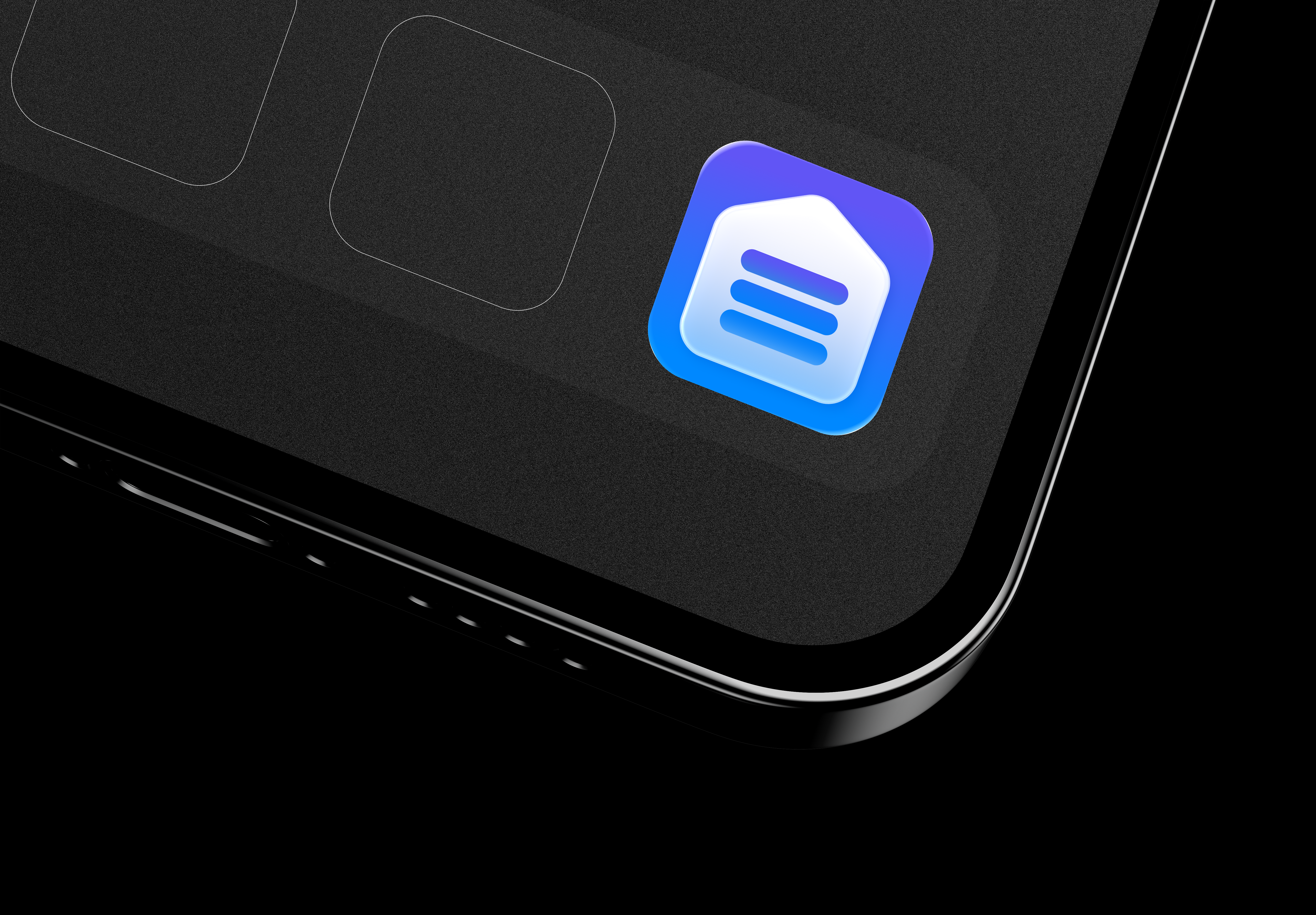
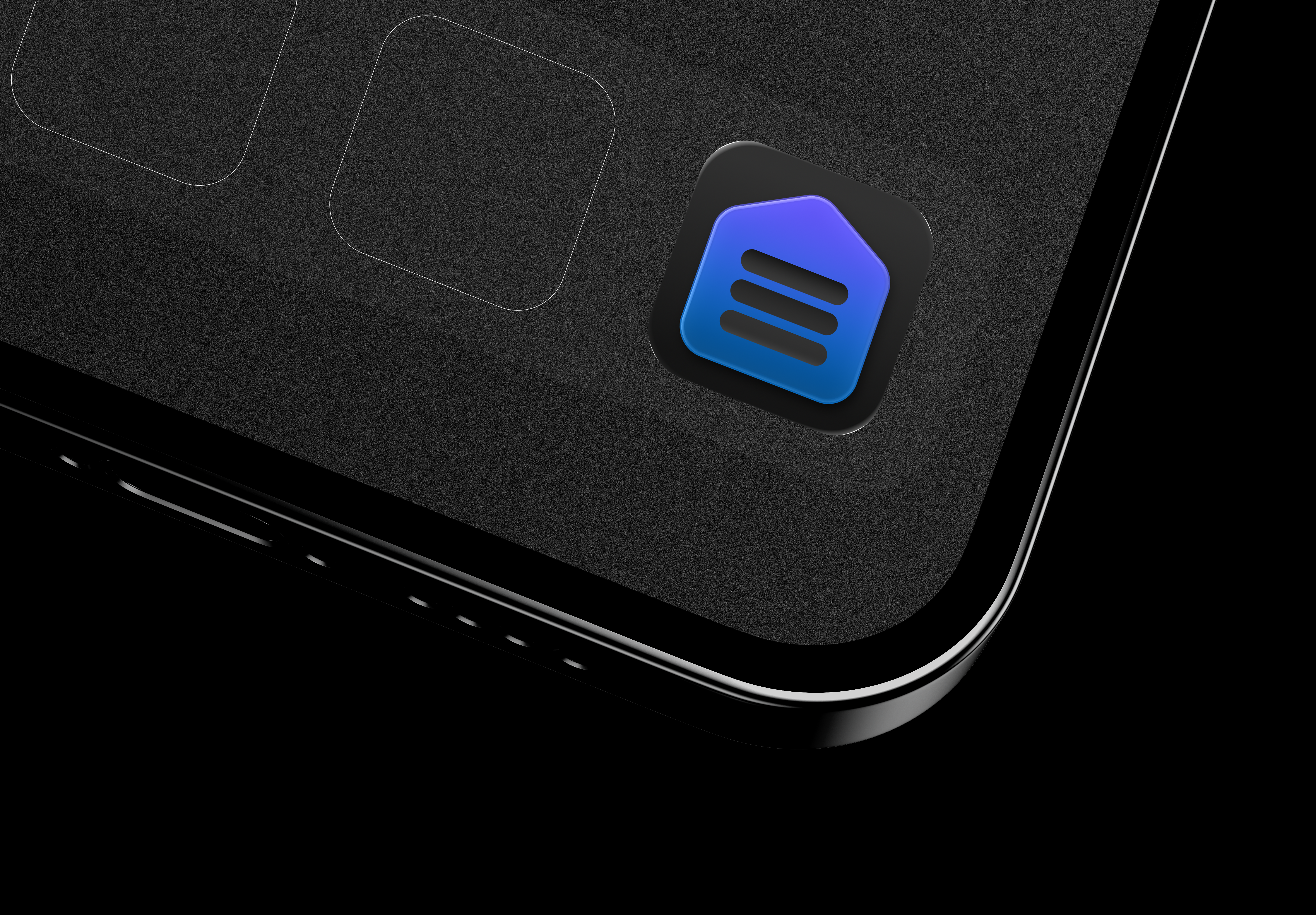
The icon was built in Apple Icon Composer around structured lists inside a house silhouette — a single mark that reads at every size and tells the product story in one glance. The 5-second light/dark swap is a small craft moment, not a gimmick.


Flexible Chore Management
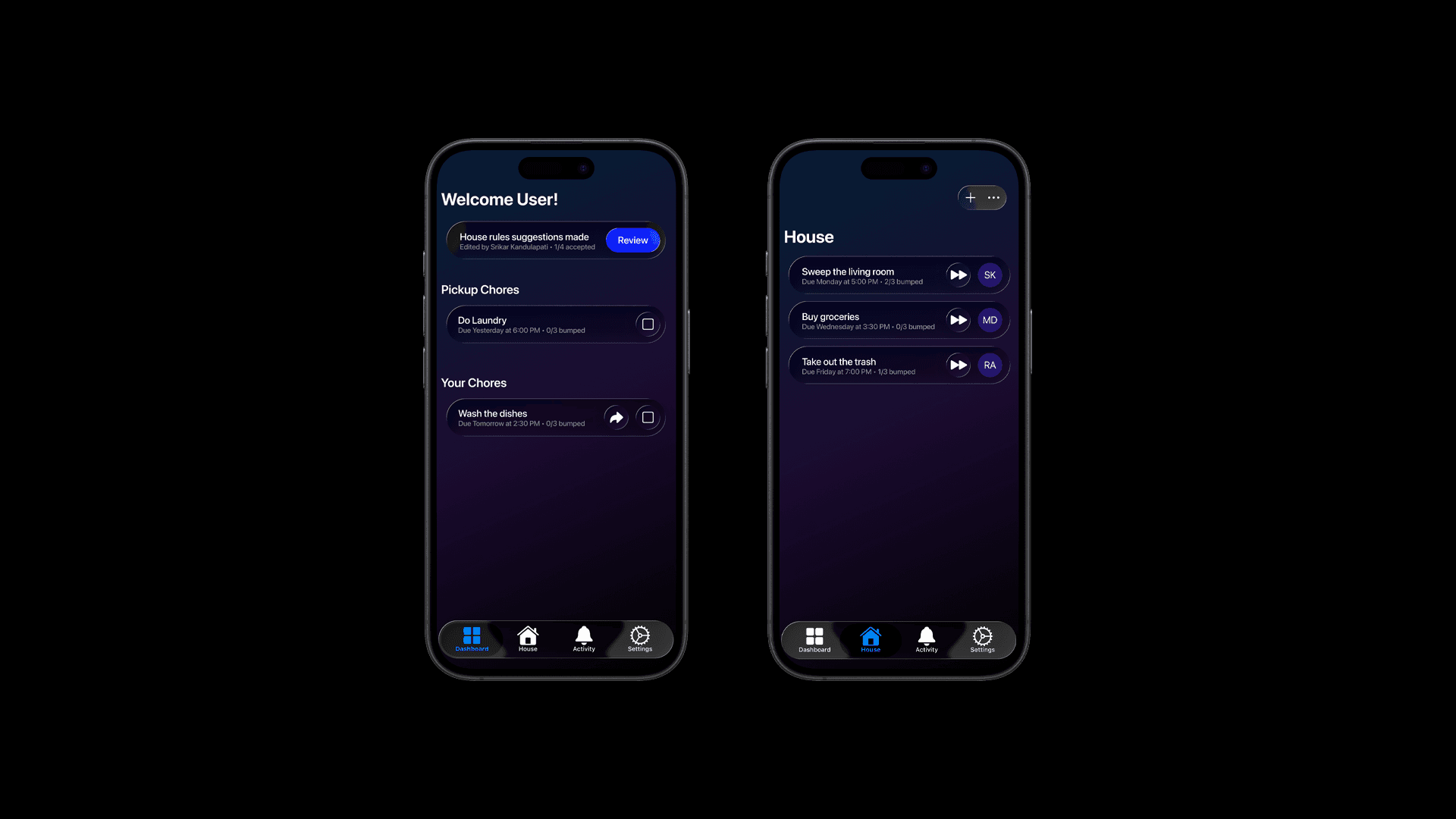
Real life breaks schedules. Housemates can bump an overdue chore to push the deadline 24 hours, pass it for someone else to claim, or let it auto-open to everyone when it lapses. Accountability stays intact without becoming punitive.
Rule Change Approval
Any rule change needs consensus from every housemate before it takes effect. The approval flow is a notification and a one-tap response — light enough not to bottleneck minor updates, structured enough that no one can change the rules unilaterally.
Rule approval flow — asset to come
Technical Stack
SwiftUI on iOS with an MVVM-flavored architecture and observable view models. Firebase handles auth, real-time sync, and storage; Cloud Functions handle anything that shouldn't live on-device. Real-time listeners keep every connected device in lockstep, so a chore marked done on one phone updates the others immediately.